
As an marketing agency, we have been supporting e-commerce businesses for years, with a deep understanding that the fitness industry is one of the most dynamic—and demanding—segments of online retail. This is a market where you’re not just selling products—you’re selling a lifestyle, motivation, and the promise of change. Customers here are highly aware, driven by the demand for an active lifestyle and a holistic approach to self-care.
Competition is intense, and success depends on the ability to build long-term relationships and retention—not just drive one-off transactions. By working with fitness e-commerce brands, we’ve developed strategies that not only generate traffic but, more importantly, turn it into a loyal community.
In this case study, we’ll show how a deep understanding of the fitness market and consumer trends enables the creation of effective SEO strategies. We’ll explain how to leverage growing demand and the need for personalization to turn your online store into a trusted partner in your customers’ journey toward better well-being.
Fitness industry specifics
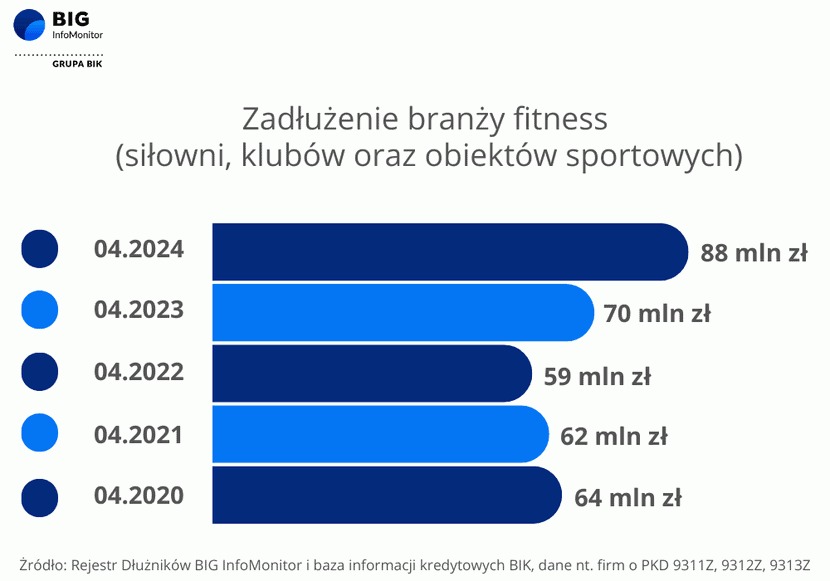
The Polish fitness market, understood as the service sector (clubs, gyms), is valued at over PLN 4 billion. This strong demand for services directly fuels a parallel fitness e-commerce market, covering equipment, apparel, supplements, and accessories. While the service sector struggles with profitability and high debt levels (nearly PLN 88 million as of April 2024), consumer demand for physical activity remains strong.
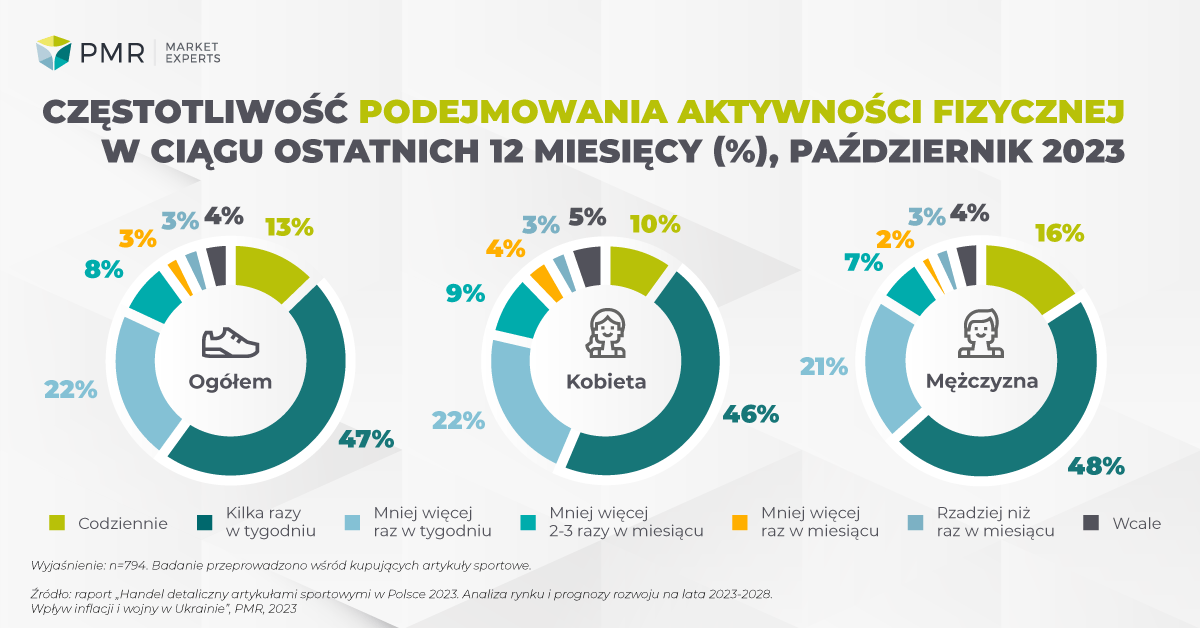
Understanding consumer behavior is key for e-commerce. A 2023 PMR study showed that as many as 47% of people buying sports products exercise regularly (several times a week). What’s even more interesting from a marketing perspective is the significant “demand gap.” A 2023 report from the Polish Ministry of Sport revealed that only 28% of Poles meet WHO-recommended physical activity levels.
This gap shows that the target audience for fitness stores is not only active athletes but also—perhaps primarily—aspirational customers looking for motivation and just starting their journey toward a healthier lifestyle.
Other key characteristics of this market include:
- Shift toward “holistic wellbeing” – the industry is moving beyond pure physical training toward holistic wellness, including mental health, supplementation, recovery, and healthy nutrition. For e-commerce, this means expanding the offer to include wellness products, yoga mats, sleep-support supplements, and meditation tools.
- Rapid digitalization – customers expect technology integration. The growing use of wearables, mobile apps for tracking progress, and even AI and VR in training is driving demand for sports electronics and requires a flawless mobile experience.
- High price sensitivity – although consumers buy equipment, nearly three-quarters of Poles don’t spend on services (e.g., gym memberships). This indicates strong price sensitivity and a preference for home-based alternatives—an opportunity for e-commerce stores offering home workout equipment.
Goals of fitness industry projects
The main goal of marketing projects in the fitness industry is to maximize customer lifetime value (LTV) by building long-term retention. Unlike industries driven by one-time purchases (e.g., wedding dresses), fitness is a process—a journey that can last for years.
A customer who buys their first pair of running shoes today will need technical apparel in a month, recovery supplements in three months, and a new sports watch within a year.
That’s why the goal of e-commerce is not a single transaction. The goal is to build expert status and become a partner that supports customers at every stage of their journey. An online store must evolve from an anonymous seller into a knowledge hub and an engaged community. Marketing should focus on education, inspiration, and personalization—so customers feel they are receiving tailored support in achieving their goals.
Fitness industry strategy
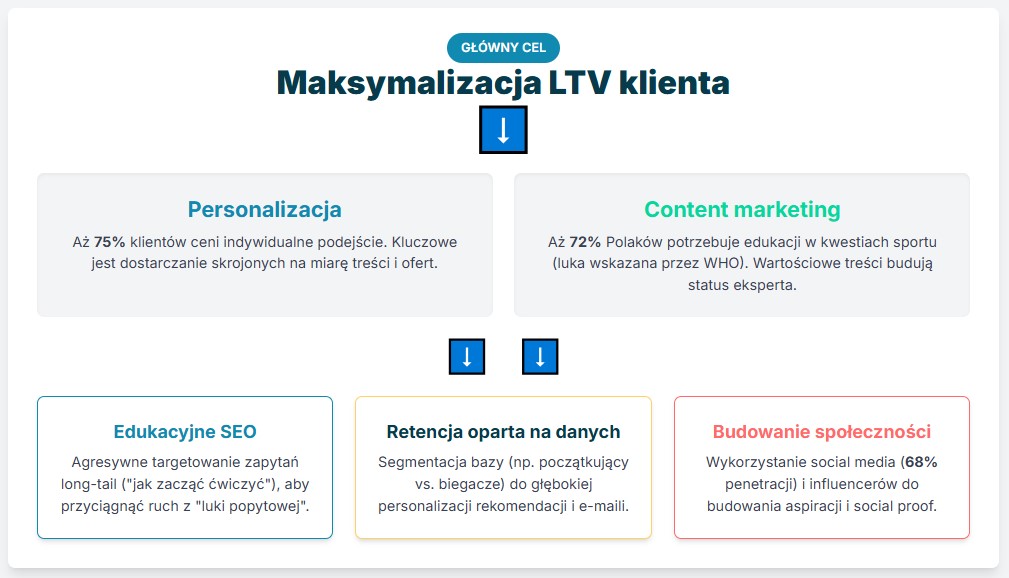
To achieve high retention, a fitness e-commerce marketing strategy must be built on two pillars: personalization and content marketing.
In a market where 75% of customers value a personalized approach, and a large group (72%) does not meet WHO standards and needs education, a product offering alone is not enough. The strategy must focus on proactively delivering value.
Education-driven SEO strategy
Instead of competing only for product-based keywords (e.g., “whey protein”), which are expensive and highly competitive, the strategy should strongly leverage long-tail informational queries. The store should become the answer to questions like “how to start working out at home,” “best diet for fat loss,” or “post-workout recovery.” A robust blog, video guides, and BMR/calorie calculators help build expert authority, attracting users seeking knowledge—who often make their first purchase along the way.
Data-driven retention strategy
Customer behavior and purchase data (where e-commerce managers and SEO specialists must work closely with analytics teams) enable deep personalization. The strategy should include segmentation (e.g., beginners vs. advanced users; runners vs. yoga enthusiasts) and delivering tailored content, product recommendations, and special offers.
Community-building strategy
Digital marketing is essential, especially with 68% social media penetration in Poland. The strategy should actively leverage visual platforms (Instagram, TikTok) to build aspiration and social proof. Collaborating with fitness influencers allows brands to authentically reach engaged audiences and present products in real-life contexts.
Marketing techniques in the fitness industry
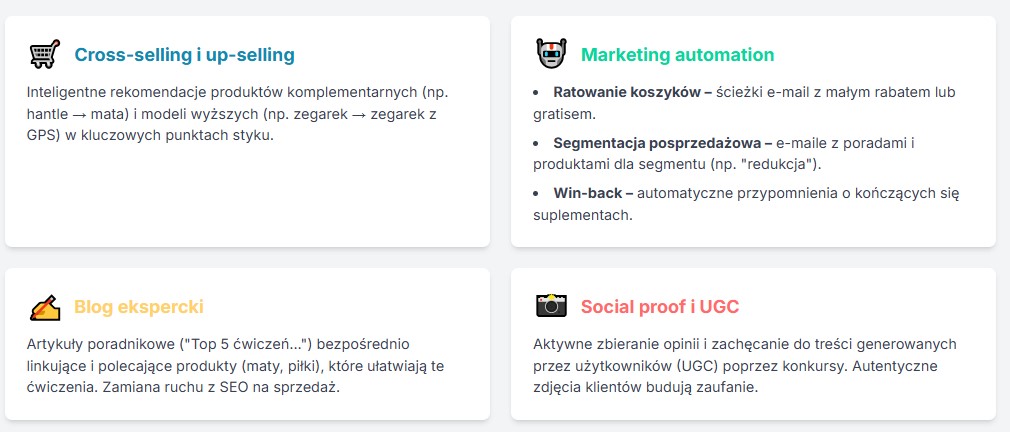
Executing this strategy requires implementing specific tools and techniques in your online store that drive sales and build loyalty.
Advanced cross-selling and up-selling
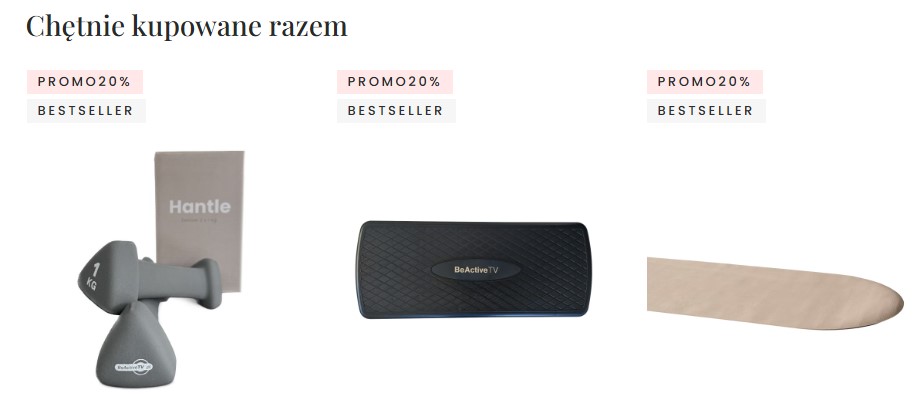
In fitness e-commerce, this technique is fundamental. Stores should intelligently recommend complementary products.
- Cross-selling – a customer adding dumbbells to their cart should automatically see recommendations for a workout mat, resistance bands, or gloves. Someone buying protein powder should be offered a shaker or vitamins.
- Up-selling – a customer viewing a basic sports watch should see a clear upgrade option, highlighting benefits (e.g., “Add $25 to get GPS and heart rate tracking”).
Marketing automation in practice
Marketing automation is key to maintaining the “customer journey.”
- Abandoned carts – implement recovery flows, often with dynamic incentives (“Complete your order within 2 hours and get a free shaker”).
- Post-purchase segmentation – a customer who buys from the “fat loss” category should automatically enter a “weight loss” segment and receive newsletters with diet tips and recommendations for fat burners or low-calorie products.
- Win-back campaigns – automated campaigns targeting customers who purchased supplements (e.g., 500g creatine), expected to run out after ~3 months. The system sends reminders like “Hey, your creatine is probably running low” with a product link.
Expert blog integrated with products

This approach connects educational content directly with the store’s offer. An article like “Top 5 at-home ab exercises” should include not only exercise descriptions but also internal linking and product boxes featuring mats, ab rollers, or gym balls. This turns organic traffic (from SEO) into real sales.
Social proof and user-generated content (UGC)
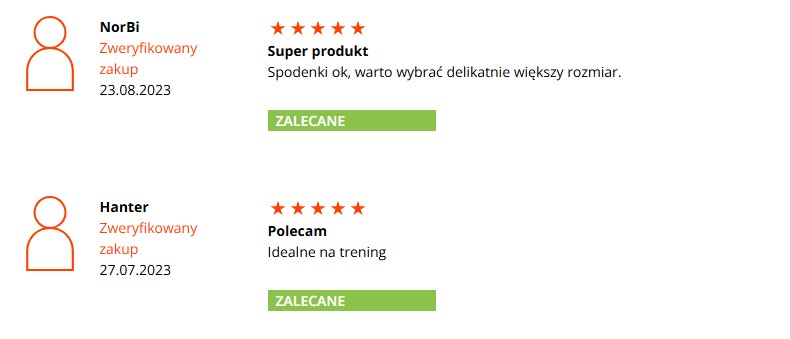
The fitness industry is driven by visual results and inspiration. Stores should actively collect and showcase customer reviews (social proof). A highly effective tactic is encouraging user-generated content (UGC)—for example, through Instagram contests (“Show your transformation with our equipment!”). Authentic customer photos on product pages build trust far more effectively than studio shots.
FEB results
For one of our clients—an online store offering a wide range of supplements, nutrition products, and training accessories—we implemented a comprehensive SEO strategy focused on achieving the goals outlined above.
Our work focused on transforming the store from a purely transactional platform into an expert-driven ecosystem. We placed the greatest emphasis on technical optimization and expanding the content strategy based on the “holistic wellbeing” pillar and education. We optimized product categories to match user intent at different stages of experience and launched an extensive educational blog.
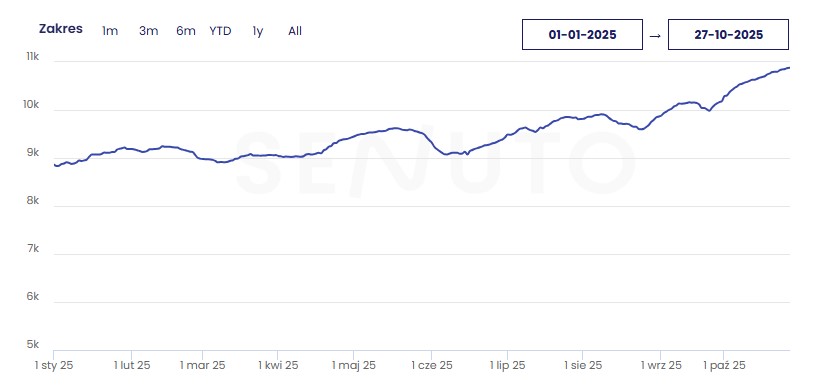
The results, visible in the Senuto chart below, show consistent and steady growth in organic visibility on Google.
This translated directly into increased organic traffic, which became the main and most stable source of new customer acquisition. Most importantly, thanks to an education-driven SEO strategy, we attracted high-intent users who came to the store looking for specific solutions (e.g., “arm workout with dumbbells”) and then purchased recommended products featured in the content.
Conclusions and summary
Fitness e-commerce is growing rapidly, fueled by the ongoing trend of health and physical activity. At the same time, the market is becoming increasingly competitive, requiring brands to shift from simple sales models to the role of a partner and expert.
As our experience shows, success is not about competing on price—it’s about building retention and maximizing LTV. Online stores that invest in value-driven content marketing, deep personalization (enabled by marketing automation), and community building gain a clear competitive advantage.
At Fabryka e-biznesu, we understand this landscape. We know how to combine technical SEO with creative content and data analytics so your store doesn’t just sell—but builds a loyal customer base that keeps coming back.
If you run a fitness e-commerce store and want to tap into the growing market potential, get in touch with us. We’ll help you create a strategy that turns your customers’ aspirations into real sales results.