
The garden industry is a market with enormous potential — but one that is heavily dependent on seasonality and shifting customer expectations. In spring, demand surges dramatically; in winter, it almost disappears entirely. Online stores must therefore fight for customer attention at the height of the season while also maintaining relationships outside of it. In this sector, customers aren’t simply looking for a product — they expect practical knowledge, inspiration, and confidence that they’re choosing the best solution for their garden.
Working with one of the leading online stores in this industry, we developed a strategy that enabled the client to:
- increase offer visibility through SEO and content development,
- build credibility through reviews, recommendations, and high-value content,
- grow the contact database and personalize communication through marketing automation.
In this case study, we show how the combination of SEO optimization, content activity, and marketing automation translated into rapid visibility growth, a higher volume of orders, and a steadily expanding base of loyal customers.
We’ll walk through the specific actions taken and the results achieved — demonstrating that in garden e-commerce, what counts is channel synergy, consistency, and the ability to capitalize on seasonal sales opportunities.
The garden industry: market overview
The garden industry in Poland is a market with enormous potential, driven by deep-rooted traditions and growing interest in maintaining private green spaces. On one hand, there are millions of private gardens across the country; on the other, the sector faces sharp seasonality and a strong dependence on weather conditions.
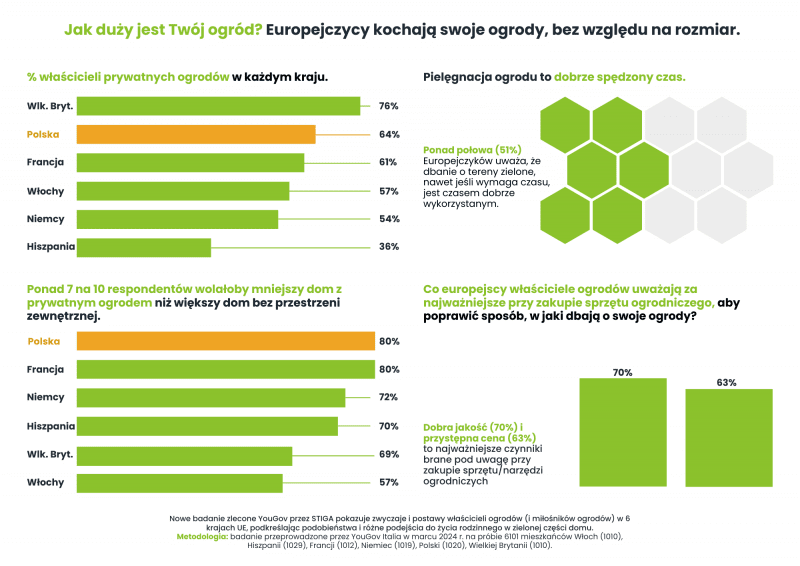
The Polish Gardens Compared to Europe study from 2024 shows that 64% of Polish people own a private garden. This is an exceptionally high figure by European standards, creating a vast potential market for stores selling plants, tools, and garden accessories. For e-commerce, this means that almost any customer could be a prospective buyer — provided the offer and communication are well matched to their needs.
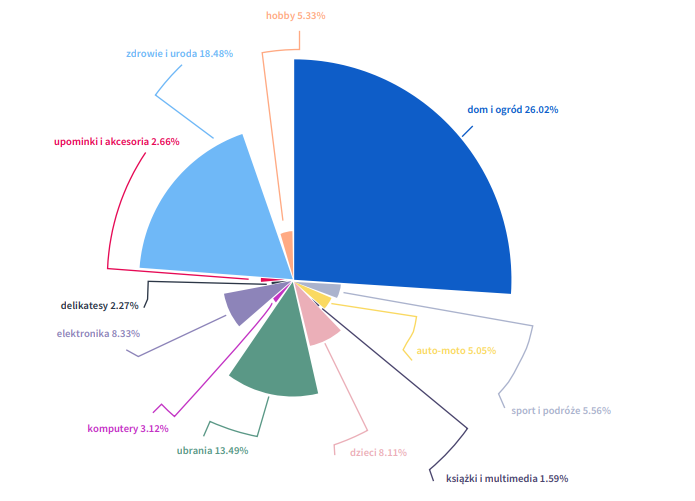
The Shoper E-commerce 360° report from 2020 shows that one in four online purchases in Poland is made through a store in the home and garden category. This illustrates the significant role the garden industry plays in Polish e-commerce. In practice, it means intense competition — but also enormous sales potential, particularly for stores that can combine an attractive offer with strong Google visibility and a smooth shopping experience.
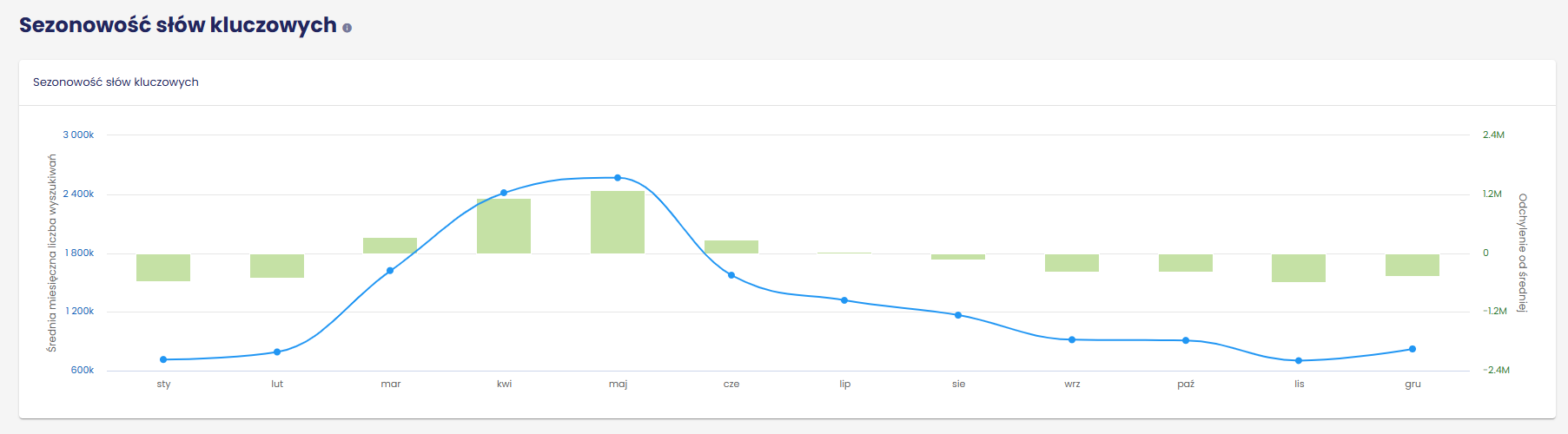
Seasonality analysis reveals a clear pattern: April and May represent the absolute peak of interest in garden products. During this period, the volume of searches and transactions multiplies, and competition for customer attention reaches its highest point. In winter months, demand almost completely disappears. For online stores, this means that preparation for the season — both in terms of product range and marketing activity — must begin well in advance.
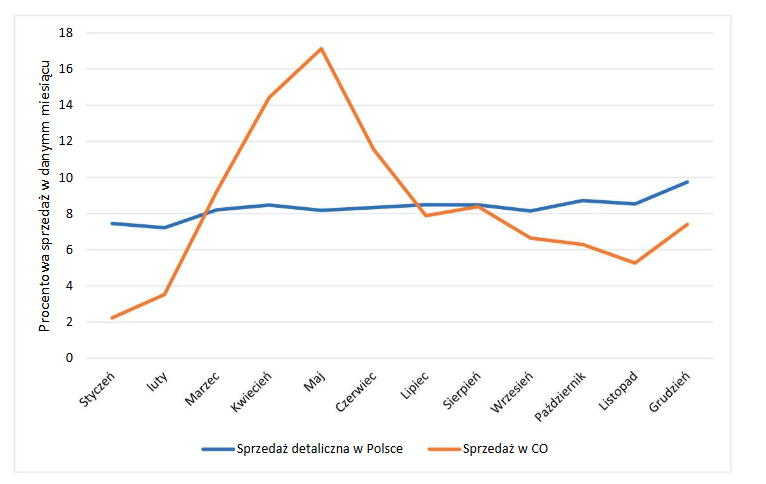
Source: Biznes Ogrodniczy magazine, August 2023
- Blue line — overall retail sales structure in Poland across all retail sectors.
- Red line — sales figures from the garden centers (GC) included in the study.
The chart compares the general retail sales structure in Poland with sales performance at garden centers. The differences are striking — while retail sales across the broader economy remain relatively stable throughout the year, the garden industry shows extreme seasonality.
The strongest growth falls in April and May, when garden sales reach values up to twice the national retail average. Customers invest heavily in plants, tools, and garden care accessories during this window. From June onward, interest gradually declines, and in the autumn and winter months, sales fall to their lowest point of the year.
Marketing objectives in the garden industry
The primary goal of marketing activity in the garden industry is to make the most of the spring sales peak — the period when demand for plants, tools, and garden accessories is at its highest. This is when online stores and garden centers compete most intensely for customer attention, as buyers make purchasing decisions in a compressed timeframe that can determine the outcome of the entire year.
At the same time, maintaining brand visibility during the autumn and winter months — when sales drop significantly — is equally important. This quieter period is best used for customer education, building an expert reputation, and cultivating loyalty, so that when the new season arrives, re-engaging customers is faster and easier.
Another strong best practice is expanding the product range to include year-round products — such as indoor plants, decorative accessories, or home care equipment — alongside seasonal winter items like snow removal tools. This keeps the brand present in customers’ minds throughout the year, maintains audience engagement between peaks, and increases basket value outside the main selling season.
Strategy for the garden industry
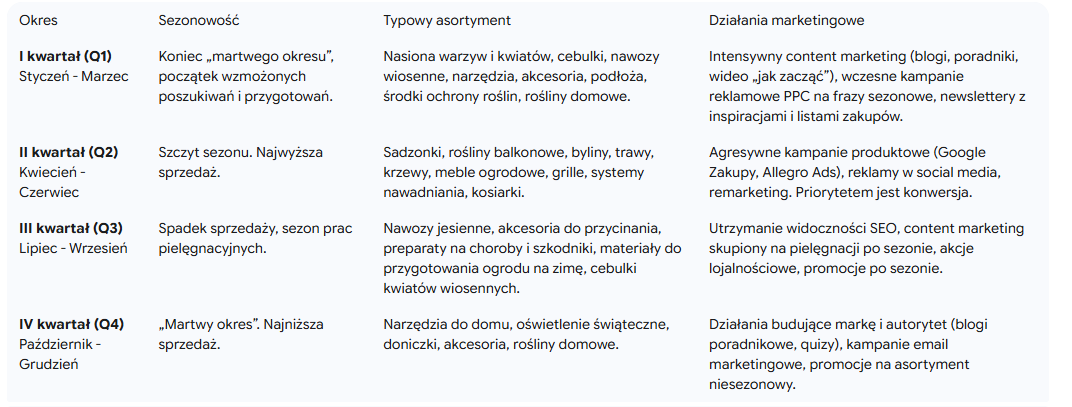
A marketing strategy in the garden industry is the tool that allows you to plan your activity deliberately across the year and align it with the natural rhythm of seasonality.
This makes it possible to maximize the high-demand periods while maintaining customer relationships when sales slow down. This approach protects the brand from reactive, season-to-season chaos and builds long-term stability.

Opportunity and challenge analysis provides a broader perspective on the market. On one hand, it identifies growth directions — from customer education to the adoption of new technologies; on the other, it highlights the constraints the industry must navigate, such as logistics. This framework helps pinpoint the most important differentiators in the garden sector.
Marketing techniques in the garden industry
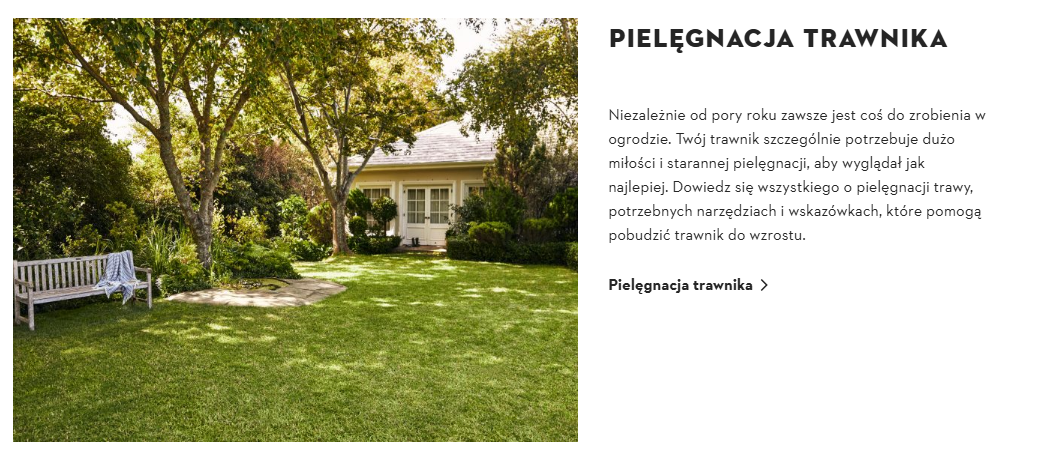
In the garden industry, a company blog serves not only as a source of organic traffic but also as a platform for building authority and trust. How-to articles that address specific customer questions — supported by well-chosen long-tail keywords — allow you to create content that both attracts and converts. A user who lands on a post about “how to plant tomatoes” can immediately move on to purchasing related products through internal links.
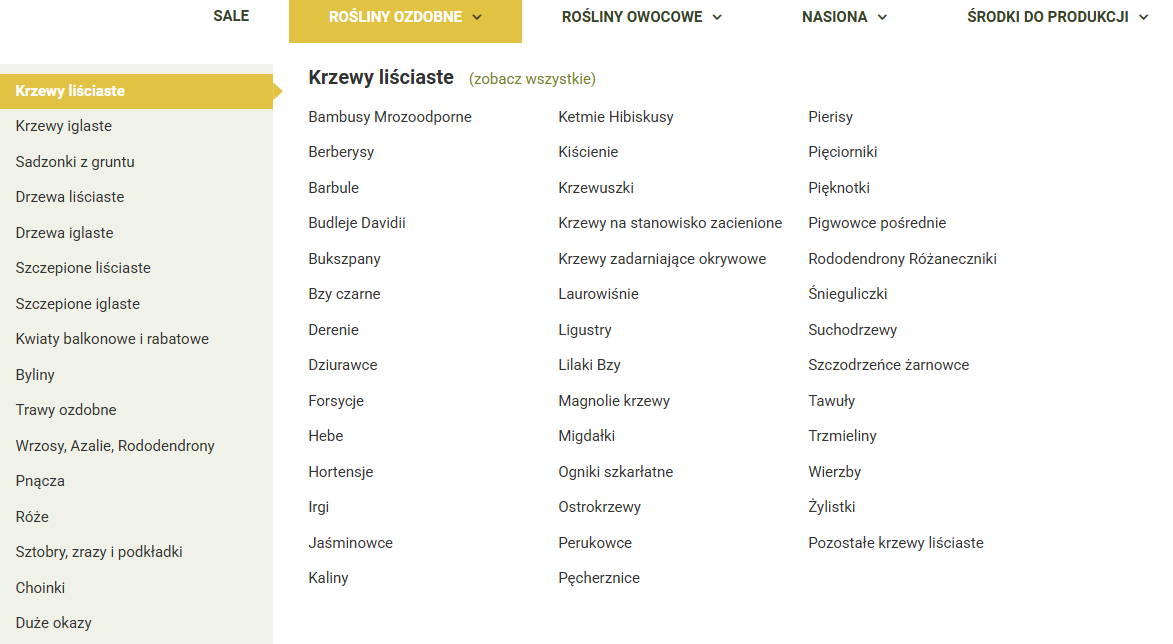
Visibility in Google alone is not enough. What matters equally is the on-site user experience — fast load times, intuitive navigation, a straightforward buying journey, and no hidden costs. The garden industry faces an additional challenge here: delivery costs, which can put customers off at the final step.

Google Shopping campaigns shorten the path from search to purchase by showing the customer a price, image, and availability at exactly the right moment. This is particularly important in spring, when every store is competing for a limited pool of customer attention.
Retargeting allows you to win back traffic that didn’t convert on the first visit. A user who came to the blog for advice may see an ad a few days later for the product they were browsing — often with a discount that nudges them toward completing the purchase.
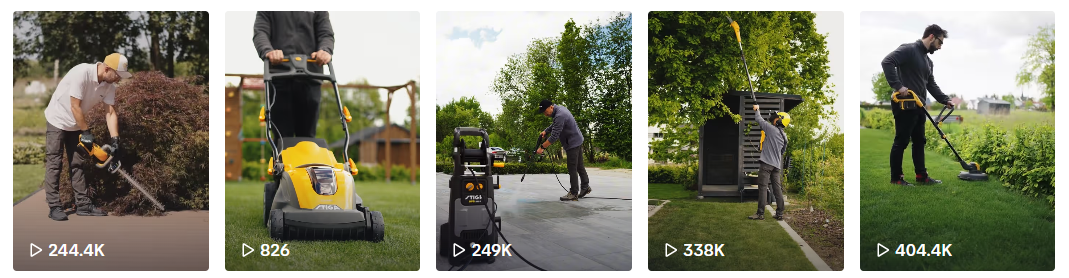
In the garden industry, Facebook, Instagram, and TikTok serve primarily as inspiration channels. These platforms are the right place to showcase garden layouts, tutorials, and customer results — reinforcing the brand image. Particularly valuable is user-generated content — photos of customers’ gardens and reviews that act as social proof, making the brand feel more relatable and trustworthy.
Our results
For a garden e-commerce store, we carried out a comprehensive SEO program covering full website optimization. This included developing in-depth product and category descriptions, building out content marketing in the form of how-to blog posts, and restructuring the site architecture to make it significantly easier for customers to find the products they were looking for.
We also implemented trust-building elements — buyer reviews, complementary product recommendations, and offer differentiators — making the site more credible and user-friendly for people planning their garden purchases.
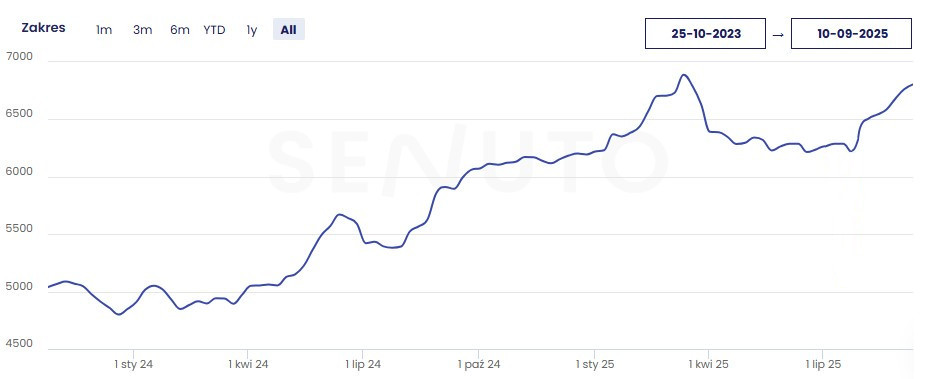
The chart shows how a consistent SEO strategy translated into regular, sustained growth in site visibility. After an initial stabilization phase, a clear upward trend emerged — placing the store among the most visible in its category. The results of our work go beyond increased organic traffic: they include a noticeable rise in the number of orders and customer inquiries.
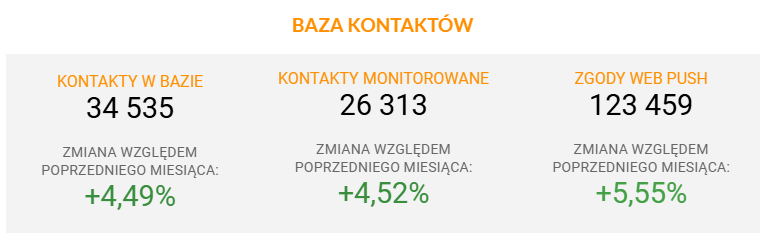
Running in parallel with the SEO activity, we also delivered a marketing automation program that systematically grew the client’s contact database. New contacts were added every month, with growth visible across total contacts, monitored contacts, and web push notification opt-ins.
As a result, the client gained not only greater organic reach but also a steadily growing subscriber base with whom they can carry out personalized communication. The consistent month-on-month growth in contacts demonstrates that the strategy of combining SEO with marketing automation builds lasting foundations for scaling sales and reaching potential customers more effectively over time.
Key takeaways
Our experience with this garden industry project showed that marketing effectiveness comes from skillfully combining multiple channels — not from focusing on a single one. Visibility in Google is just the starting point. It’s only when paired with high-value content, paid campaigns, and communication automation that a coherent ecosystem emerges — one that translates directly into sales.
The garden industry demands a flexible approach. A marketing strategy must be built to handle sharp spikes in interest during spring while also keeping customers engaged outside the season. Only by doing both can you achieve stable, long-term growth, maximize sales at the moments that matter most, and build a lasting market position.
Your e-commerce store deserves real results. Get in touch — together, we’ll build a strategy that delivers sales, not just numbers in a report.